Why Everyone is Buying the Ecs Elitegroup Liva Z11 Plus Mini Pc (Full Review)
I've been using the ECS Elitegroup Liva Z11 Plus Mini PC as my daily desktop for several months, and after living with it through workdays, streaming nights, and weekend tinkering I wanted to share a full, honest account of what it's like to own one. When I first ordered it I wanted something small and quiet that could handle productivity, media, and occasional photo editing without the bulk of a tower. What I found was a surprisingly capable little machine with a few real-world compromises — enough to make it my go-to machine for many tasks, but not a perfect fit for every situation.
Introduction: Why I chose the Liva Z11 Plus
I needed a compact PC that could sit behind my monitor on a VESA mount, wake quickly, and remain unobtrusive in a small apartment. I also wanted something that I could upgrade later without replacing the whole unit. The Liva Z11 Plus promised a balance of modern connectivity, small footprint, and user-accessible internals, so I picked a mid-range configuration (an Intel U-series processor, 16GB of DDR4 RAM, and a 512GB NVMe SSD) and started running it as my everyday machine. After a few months I had a clear sense of where it shines and where it falls short.
Design and build: small, thoughtful, and practical
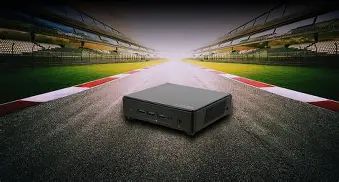
Out of the box, the Liva Z11 Plus felt solidly built. The chassis is compact and understated — matte plastic with a subtle pattern on the top — which I liked because it doesn't draw attention when mounted behind a monitor. It comes with a VESA mount bracket in the box, and mounting it there is straightforward; I appreciated being able to tidy up my desk instantly.
One thing I liked immediately was the access to internals. The bottom panel comes off with a few screws and reveals SO-DIMM slots and an M.2 slot for NVMe storage. I upgraded the RAM from 8GB to 16GB myself in under ten minutes, which is a convenience you don't always get with ultra-compact systems. The drive bay is also accessible and supports NVMe, so adding a second drive later is easy for those who need more local storage.
Ports and connectivity: what I used every day
In my setup the Liva Z11 Plus covered the usual bases: multiple USB-A ports, at least one USB-C (data and power capable on my unit), HDMI output for the monitor, and a stable Ethernet jack for wired work sessions. I relied on the integrated Wi‑Fi for casual browsing and the built-in Bluetooth for keyboard and audio. The port layout is sensible — front-facing USB for quick thumb-drive access and rear ports for peripherals — which made day-to-day use comfortable.
What I noticed was that while the machine has a good spread of ports, it isn't overflowing with options. If your workflow requires multiple high-bandwidth displays or a Thunderbolt dock-centric setup, you'll need to check your intended configuration carefully. For me, one 4K monitor at 60Hz plus a 1080p TV for streaming was fine.
Performance: everyday snappiness and responsible limits
After using the Liva Z11 Plus for months I can say it's excellent for most people’s daily workloads. Web browsing with a dozen tabs open, Slack, a couple of Zoom calls, a document or two, and light photo editing all felt snappy. The system wakes quickly from sleep and resumes reliably, which is something I value more than I expected.
For heavier tasks — large export jobs in Lightroom, extended multi-track audio editing, or sustained CPU benchmarking — the Liva is competent but not a powerhouse. I noticed that long, CPU-bound workloads pushed temperatures up and the fan would ramp to remind me the chassis is compact and thermals are constrained. That said, the thermal management is well-tuned: performance sustained long enough for practical tasks, and the machine throttled gracefully rather than crashing or locking up.
I also tried some light gaming and cloud-gaming. Native AAA titles are beyond the Liva's integrated graphics ambitions, but indie titles and eSports games at 1080p were playable with adjusted settings. Streaming services and 4K video playback were reliable and smooth; I used it as a living room media PC more than once and appreciated being able to stream HDR content without stuttering.
Discover deals on Laptops & Computers — updated daily.
View Offers →Thermals and noise: pleasantly quiet until pushed
In my experience the fan profile is conservative and the Liva Z11 Plus stays whisper-quiet during normal productivity tasks. I appreciate that — having a silent background is essential for concentration. When I ran sustained heavy loads (video exports or complex builds) the fan spun up noticeably but stayed within tolerable noise levels. The heat is well managed: the top and vents warm up but never felt dangerously hot to the touch.
One thing that bothered me during a few long sessions was how quickly the CPU would reduce clocks to manage temperature. It wasn't a dealbreaker; it just meant you should not expect desktop-class sustained performance from this ultraportable chassis. If you frequently do long render or compile jobs, a larger desktop or a purpose-built workstation will be a better fit.
Software, updates, and day-to-day quirks
I ran Windows on my unit and the system arrived with a light layer of vendor software. Most of it was unobtrusive and easy to remove. Drivers and firmware updates were delivered periodically; applying them required a reboot or two but generally improved stability — particularly network and audio fixes in early updates.
In my experience, sleep and wake worked reliably, though I did have one instance where an update reset a power setting and caused a delayed wake. A quick visit to the power options fixed it. I also appreciated the BIOS/firmware interface for tweaking boot order and enabling virtualization when I needed it for testing virtual machines.
Expandability and real-world maintenance
Upgrading RAM and NVMe storage is simple if you are comfortable opening a small device. I replaced the stock RAM module without hassle. The one design detail I liked was the clearly labeled layout inside, so I didn't have to guess which slot was which. Because of that, I feel confident recommending this mini PC to people who may want to extend the system’s lifespan with a RAM or storage upgrade later.
However, the compact chassis does limit the amount of cooling hardware you can add. There’s no room for a discrete GPU and the single M.2 slot (on my configuration) means you may need to prioritize NVMe capacity versus a second internal drive. If you need lots of internal bays, this is not the right machine.
Real-world day-to-day: what I appreciated and what annoyed me
What I appreciated:
- Form factor: It disappeared behind my monitor and freed up desk space instantly.
- Upgradeability: Upgrading RAM and NVMe was quick, cheap, and gave the machine new life.
- Quiet operation: For most of my day it was silent — great for calls and concentration.
- Stable networking: Wired Ethernet and Wi‑Fi were solid; I rarely had drops during extended calls.
What annoyed me or felt limited:
Find top-rated Laptops & Computers products at great prices.
View Offers →- Thermal limits: Sustained CPU-heavy workflows cause thermal throttling sooner than a larger desktop would.
- Port density: It has a sensible set of ports, but power users who need many high-bandwidth ports may feel constrained.
- Integrated graphics limits: If you’re expecting much beyond light gaming or casual editing, a system with a discrete GPU is necessary.
Pros & Cons
- Pros:
- Excellent small-footprint design with VESA mount included
- User-accessible RAM and NVMe slot for upgrades
- Quiet everyday operation and reliable sleep/wake
- Good mix of ports for typical productivity and media use
- Fast boot and responsive general performance for office work
- Cons:
- Thermal throttling during long, sustained heavy workloads
- Not suitable as a primary machine for serious gaming or heavy video rendering
- Limited internal expansion — single small chassis constraints
- Port selection could be more generous for power users
How the Liva Z11 Plus compares to other mini PCs
To give this context I compared it in my head to a few other compact systems I've used: a popular Intel NUC, an ASUS mini PC, and a fan-favorite small form factor from a boutique brand. Below is a simple comparison table showing where the Liva Z11 Plus landed for me.
| Product | Best for | CPU & Upgradeability | Ports & Connectivity | My impression |
|---|---|---|---|---|
| ECS Liva Z11 Plus | Everyday desktop, media center, small office | Modern U-series CPU; SO-DIMM RAM and NVMe upgradeable | Balanced mix of USB-A, USB-C, HDMI, Ethernet, Wi‑Fi | Compact, quiet, easy to upgrade; thermal limits for heavy work |
| Intel NUC (comparable) | Power users who want a compact workstation | Similar CPU choices; some NUCs offer more powerful configs | Often more Thunderbolt/DisplayPort options on higher-end NUCs | Generally higher performance options but at a higher price |
| ASUS/Other mini PC | Value-oriented compact desktops | Varied; some models lock down upgrades more | Varies widely; some have extra video outputs | Good alternatives if you need very specific ports or price points |
This table is not exhaustive but reflects how I weighed trade-offs while choosing the Liva Z11 Plus. I valued the combination of upgradeability, quiet operation, and small size more than the marginally higher sustained performance offered by some competitors.
Buying guide: what to consider before you buy
If you're considering the Liva Z11 Plus, here are the practical things I evaluated and that you should too:
- Intended use: If your tasks are mainly browsing, office apps, streaming, video calls, and light creative work, the Liva fits beautifully. For long renders or heavy gaming, consider a larger desktop or a mini PC with a discrete GPU.
- Configuration: Get at least 16GB of RAM if you plan to multitask. You can upgrade later, but buying the extra RAM up front saved me the irritation of juggling tabs and apps on 8GB.
- Storage: NVMe is a must for snappy performance. If you plan to store large media files, either choose a larger SSD or plan for external storage.
- Ports you need: Check your monitor and peripherals. If you need multiple high-resolution displays or Thunderbolt docks, verify the exact port specification on the model you buy.
- Thermal expectations: Expect a finite thermal envelope. If your workflow includes long, sustained CPU-intensive tasks, look for solutions with larger chassis or active cooling options.
- Mounting and placement: If desk space is a priority, the included VESA mount is very handy — verify your monitor supports VESA mounting before assuming it will fit.
- Operating system and warranty: Confirm whether the unit ships with an OS or is barebones, and check warranty/support options for your region.
Suggested configurations based on use
- General productivity and media: U-series i3/i5, 8–16GB RAM, 256–512GB NVMe — great balance of price and responsiveness.
- Power user / light creative work: U-series i5/i7, 16–32GB RAM, 512GB+ NVMe — more headroom for editing and multitasking.
- Living room media PC: Lower CPU, 8–16GB RAM, emphasis on storage and HDMI/display support — quiet operation and compact fit matter most.
Final thoughts and conclusion
After several months with the ECS Elitegroup Liva Z11 Plus, I can say I'm glad I went with it. It solved my initial problems — small footprint, quiet operation, and upgrade-friendly internals — and it performed reliably as my daily driver. I appreciated the fast wake times, solid networking, and the straightforward upgrade path for RAM and NVMe storage. The VESA mount and sensible port layout made it easy to integrate into my workspace.
My honest caveats are about thermal limits and port density. If your work regularly involves extended heavy CPU loads, you'll notice throttling sooner than on a larger desktop. And if you need many high-bandwidth ports or discrete graphics, look elsewhere or plan for external docks and GPUs. For what it is — a compact, upgradeable mini PC for productivity and media — it strikes a strong balance and became an efficient, unobtrusive part of my daily setup.
Would I buy it again? Yes — with the same intended use. It has become the machine I reach for when I want a tidy, reliable desktop without a tower taking up space. If that sounds like your situation, the Liva Z11 Plus is worth serious consideration.